"I can’t tell you how much your support means to me. My call today with you was invaluable. You came into our lives at the perfect time. It’s rare to just be able to talk without a sales pitch. I could tell that my needs were more important." - Diane
Discover how you can get better cancer treatment! Get your questions answered now
We are a Canadian-based Precision Oncology and Testing Program Facility dedicated to supporting physicians and patients worldwide.
For over 15 years, CTOAM has collaborated with clinicians to provide more thorough, accurate, and rapid molecular insight, helping patients access the most advanced scientific tools and support available today.
Our integrated research laboratory, Liquid Biopsy Labs (LBL) in Burnaby, BC, performs high-depth sequencing and molecular analyses as part of this comprehensive program.
Our program supports physicians and patients seeking:
Whole-transcriptome exosomal RNA sequencing (20,813 genes) to detect early cancer-associated activity and pre-cancerous molecular patterns before tumours form or appear on imaging.
High-depth DNA and RNA sequencing provides a clear understanding of tumour biology, pathway activity, and resistance signals, to develop a personalized molecular profile that can be used to inform future treatment discussions with their oncology team.
Clear scientific summaries and pathway-level insights that help your patients and clinicians explore additional directions for diagnostic or therapeutic consideration.
Watch the videos below to learn how comprehensive tumor DNA sequencing panels and RNA expression testing inform cancer care.
Throughout this process, our team provides full patient navigation and advocacy, ensuring your patients feel supported, informed, and guided at every step.
In our experience working with thousands of patients, enhanced diagnostics contribute to 90% meaningful changes in treatment planning, often identifying five or more approved treatment options beyond what had initially been considered through standard testing alone.
Our assays also support discussions about early biological activity, resistance mechanisms, alternative therapeutic classes, trial-relevant pathways, and metabolic/lifestyle factors influencing disease behaviour.
Patients who may benefit from our precision oncology
program can be referred immediately.
Just fill out our downloadable referral form and fax it to our
office directly at 1-866-264-1619, along with any relevant medical records.
Discover how doctors and oncologists can provide their patients with better success rates, longer lives, and higher quality of life (before, during, and after treatment) by integrating the newest advancements in precision cancer medicine into a patient’s treatment plan – and how this integration is made possible through our expert team and the services we provide at CTOAM.

A 2024 report, “Wait Times for Health Care in Canada,” found that the median time from general practitioner referral to treatment initiation is 30 weeks.
This delay – approximately 7.5 months – allows for potential disease progression before therapy begins, often without comprehensive molecular insight to inform optimal treatment selection.
These delays underscore a critical gap in timely, precision-guided cancer care.
At CTOAM, patients can receive molecular evaluation and treatment guidance within approximately one month of an initial consultation, supporting earlier, evidence-informed clinical decision-making using globally available options.
Delays in access to diagnostic technologies remain unacceptably long:
Physician workforce shortages are projected to persist, contributing to continued delays in patient access to diagnostic testing and treatment. Proactive solutions are needed now.

While wait times for patients with confirmed cancer diagnoses have not increased to the same degree, significant gaps in care remain:
Together, these factors contribute to a critical national issue: A high proportion of cancers in Canada are first diagnosed at Stage IV.
Earlier detection expands treatment options and improves outcomes. Improving timely access to advanced diagnostics must be a national priority.
This short video from Global News highlights just one province’s struggle with physician shortages – and the resulting impact on patients.
Unfortunately, this issue extends across all ten provinces. A brief search reveals widespread reporting on similar challenges nationwide.
As the chart below illustrates, wait times have not meaningfully improved, despite years of concern raised by physicians’ associations, patient advocacy groups, clinical studies, and recommendations from Health Canada. The urgency of reducing wait times has been clearly articulated – yet systemic delays persist.
| Province | 2023 | 2024 | Province | 2023 | 2024 |
|---|---|---|---|---|---|
| British Columbia | 27.7 | 29.5 | Ontario | 21.6 | 23.6 |
| Alberta | 33.5 | 38.4 | Quebec | 27.6 | 28.9 |
| Saskatchewan | 31.0 | 37.2 | New Brunswick | 52.6 | 69.4 |
| Manitoba | 29.1 | 37.9 | Nova Scotia | 56.7 | 39.1 |
| P.E.I. | 55.2 | 77.4 | Newfoundland and Labrador | 33.3 | 43.2 |
Source Data: 2023-2024 Comparison
Standard cancer care often begins with diagnostic imaging such as ultrasound and CT scans. While widely used, these tools have important limitations.
These tests often:
As a result:
Too often, patients seek care after years of ineffective treatment, an initial misdiagnosis, or reassurance that they were cancer-free—only to later discover that the disease was present and progressing.
Newer diagnostic approaches in precision cancer medicine – including PET-CT imaging, PET-MRI, and next-generation sequencing (NGS) molecular testing – enable clinicians to:

For example, in the image above, the patient was told they were cancer-free based on the CT scan (left side). When the patient opted to get a private PET/CT scan (right side), the PET/CT scan showed a tumour that would have otherwise gone untreated.
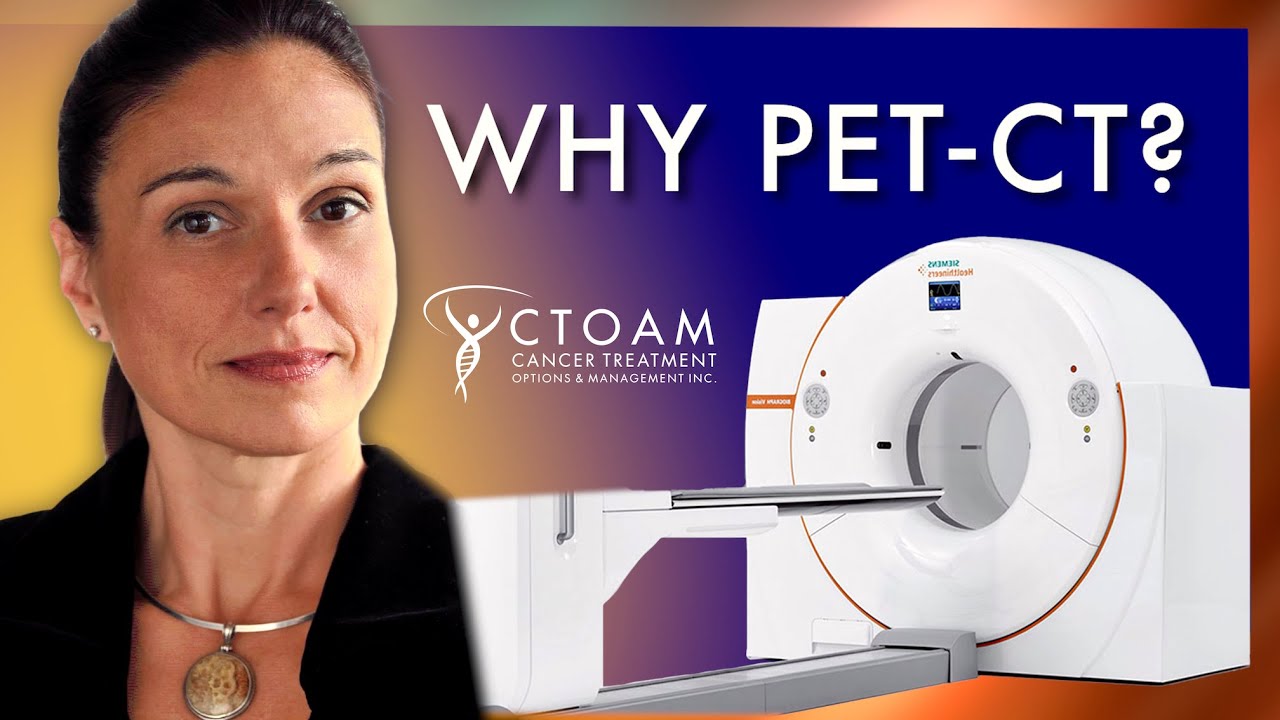
With only ~45 PET/CT scanners nationwide compared to hundreds of CT scanners, access to PET/CT imaging remains limited for physicians and patients in Canada.
Limited availability of PET/CT scanners in Canada restricts physician access to advanced imaging compared to standard CT scans.

 PET/CT represents one of the medical imaging modalities with the
largest growth
worldwide. In 2009,
approximately 2,000 PET/CT scanners were installed in the Untitled States and approximately 350 were
installed in Europe. Considering a population of about 307 million in the United States and 830 million in
Europe, the United States has installed about 6 times as many scanners as all of Europe but has only one
third of the population. (Courtesy of Siemens/CTI.)
PET/CT represents one of the medical imaging modalities with the
largest growth
worldwide. In 2009,
approximately 2,000 PET/CT scanners were installed in the Untitled States and approximately 350 were
installed in Europe. Considering a population of about 307 million in the United States and 830 million in
Europe, the United States has installed about 6 times as many scanners as all of Europe but has only one
third of the population. (Courtesy of Siemens/CTI.)
Data from international studies show that cancer treatment plans are modified in more than 87% of cases following PET/CT imaging – and in up to 93% of breast cancer cases.
PET/CT provides critical insight into the true stage of disease, including the presence and location of metastatic spread. This information supports faster, more appropriate treatment selection.
As a result:
Together, these advantages contribute to more precise, effective cancer care.
Organizations such as ASCO have published hundreds of studies demonstrating the clinical value of PET-CT and PSMA-PET in cancer diagnosis.

Early detection dramatically improves cancer outcomes. Up to 90% of common cancers are potentially curable when identified at an early stage.
However, survival rates decline substantially when cancer is first diagnosed at later stages.
Despite advances in care, nearly 50% of cancers are still detected at advanced stages, when treatment options are more limited and outcomes are poorer.
Alarmingly, Canada has one of the highest rates of late-stage (Stage IV) cancer diagnoses among developed nations – highlighting a critical gap in early detection and diagnostic access.
Improving the timeliness and precision of cancer detection must be a national priority.
The LRNA liquid biopsy, available today, is designed to detect molecular signals associated with cancer before solid tumors are clinically detectable.
This enables identification of disease at the earliest biological stages, potentially prior to Stage I – when intervention may be more effective and less resource-intensive.
Earlier detection supports:
While these capabilities exist today, they are not yet routinely accessible through standard care pathways.
What is critical to understand is this:
Practical, achievable solutions already exist – and could significantly reduce delays and late-stage diagnoses.
For example:
Together, these approaches could meaningfully improve early diagnosis, treatment selection, and patient outcomes – while reducing strain on healthcare systems.
Emerging technologies such as liquid biopsy are enabling earlier cancer detection than ever before – when used appropriately and with the right methodology. Not all liquid biopsy tests are equivalent.
The potential benefit of liquid biopsy for early diagnosis is highlighted in a recent study presented by American Society of Clinical Oncology (ASCO), titled:
Using statistical modeling, the study demonstrates that detecting cancer through liquid biopsy – rather than relying solely on imaging or symptom onset – could significantly reduce cancer-related mortality by enabling earlier intervention.
The LRNA liquid biopsy is designed to support earlier cancer detection through comprehensive analysis of exosomal RNA expression across cancer-associated molecular signals.
Rather than focusing on a limited subset of DNA alterations, the test evaluates:
This broad molecular profiling enables early detection and ongoing monitoring using a single blood sample.
Results are typically available within approximately three weeks, supporting timely clinical decision-making without the need for invasive procedures.
Patients who may benefit from our precision oncology
program can be referred immediately.
Just fill out our downloadable referral form and fax it to our
office directly at 1-866-264-1619, along with any relevant medical records.
"I can’t tell you how much your support means to me. My call today with you was invaluable. You came into our lives at the perfect time. It’s rare to just be able to talk without a sales pitch. I could tell that my needs were more important." - Diane
Discover how you can get better cancer treatment! Get your questions answered now
Get the latest advancements in cancer care delivered straight to your inbox each month!
Discover the newest, leading-edge advancements in cancer care...